


Insulin for Type 2 Diabetes
For many people living with type 2 diabetes, hearing the words “you may need insulin” can feel like crossing an invisible line. I have spoken with patients who immediately assume their diabetes has become severe or that they have somehow failed at managing it.
As Dr William Johnson, I want to clear up that misunderstanding from the beginning. Insulin for type 2 diabetes is not a punishment, nor does starting insulin mean you failed. Type 2 diabetes can change over time, and treatment often needs to change with it.
Your body naturally produces insulin in the pancreas. This hormone helps glucose move from the bloodstream into cells, where it can be used for energy. With type 2 diabetes, the body becomes resistant to insulin. Initially, the pancreas may compensate by producing more, but over time it may struggle to produce enough.
That is why someone who successfully managed diabetes with food choices, physical activity, and medication for years may eventually need insulin.
What Type of Diabetes Needs Insulin?
A question I regularly hear is, what type of diabetes needs insulin?
People with type 1 diabetes need insulin because their pancreas produces little or no insulin. Type 2 diabetes works differently. Many people with type 2 diabetes continue producing insulin, particularly during earlier stages, but their bodies cannot use it efficiently because of insulin resistance.
As the condition progresses, insulin production may decrease. When lifestyle measures and other glucose lowering medicines are no longer sufficient, insulin may become an appropriate treatment.
This also answers another common question: what type of diabetes requires insulin?
Type 1 diabetes requires insulin for survival. Some people with type 2 diabetes require insulin to achieve appropriate glucose control, while others never need it. Insulin may also be needed temporarily during severe illness, surgery, hospitalization, pregnancy, or periods of significant hyperglycemia.
People also search for what type of diabetes is insulin dependent. Historically, type 1 diabetes was called insulin dependent diabetes mellitus. Today, healthcare professionals generally use the terms type 1 and type 2 diabetes because treatment needs can vary considerably.
If someone with type 2 diabetes starts insulin, their diagnosis does not suddenly become type 1 diabetes. They still have type 2 diabetes and are simply using insulin as part of their treatment.
Why Might Someone With Type 2 Diabetes Need Insulin?
Imagine you have followed your treatment plan carefully for several years. You take your medication, stay active, and pay attention to meals. Yet your glucose readings gradually begin rising.
It is easy to blame yourself, but type 2 diabetes is progressive for many people.
According to current American Diabetes Association guidance, insulin may be considered when symptoms of hyperglycemia are present or when blood glucose or A1C levels are very high. Treatment decisions, however, should always be individualized.
Healthy eating remains important whether you use insulin or not. Understanding how carbohydrates, portions, fiber, and meal timing affect glucose can make treatment easier.
There are several types of insulin, including rapid acting, short acting, intermediate acting, long acting, ultra long acting, and premixed formulations. Each has a different onset and duration.
The right choice depends on glucose patterns, lifestyle, other medications, risk of hypoglycemia, affordability, and individual treatment goals.
Insulin Pens for Type 2 Diabetes
For someone starting insulin, the injection itself is often the biggest worry. Fortunately, insulin pens for type 2 diabetes have made insulin administration more convenient for many people.
An insulin pen is a device designed to deliver a measured dose of insulin. Instead of drawing insulin from a vial into a syringe, the patient selects the prescribed dose on the pen and administers it through a small needle.
Pens can be particularly useful for people who want a portable and straightforward insulin delivery method.
Names of Insulin Pens for Type 2 Diabetes
People searching for the names of insulin pens for type 2 diabetes should understand that the insulin medication and the pen device are related but not necessarily the same thing.
Different insulin preparations are available in pen formats, including forms of insulin glargine, insulin degludec, insulin aspart, insulin lispro, and premixed insulin. Brand availability varies between countries.
Rather than choosing insulin based on a familiar brand name, discuss the insulin type, duration of action, dosing requirements, device features, affordability, and availability with your healthcare professional.
Your prescription should fit your medical needs rather than simply the popularity of a particular pen.
Types of Insulin Pens for Type 2 Diabetes
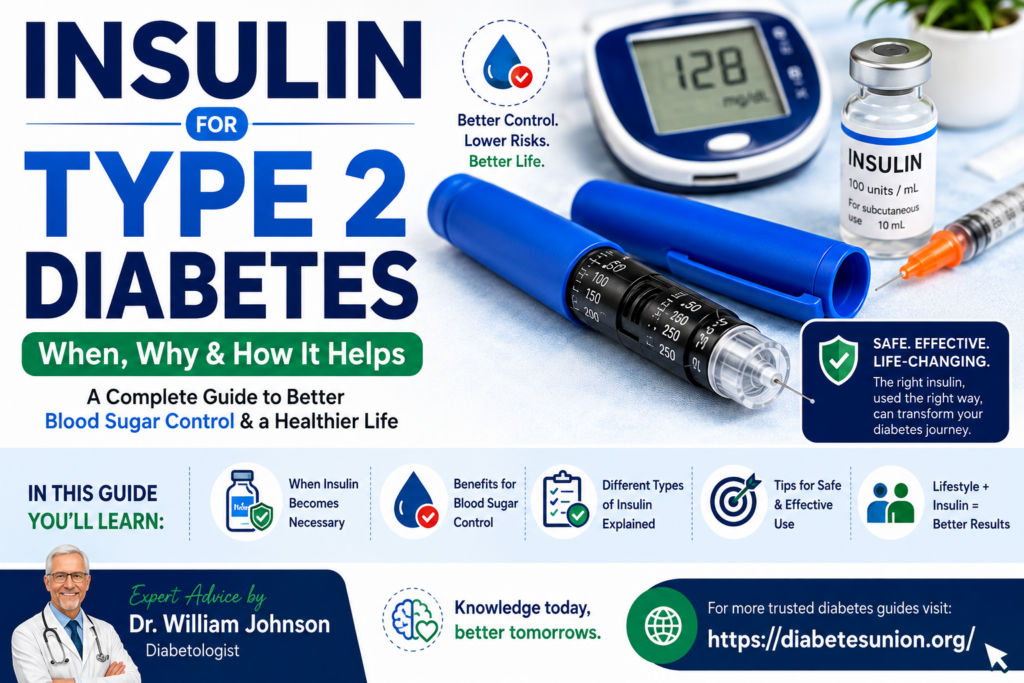
The types of insulin pens for type 2 diabetes generally include disposable prefilled pens and reusable pens.
A disposable pen comes prefilled with insulin and is discarded according to manufacturer instructions when empty or when its recommended in use period has ended. Reusable pens use replaceable insulin cartridges.
Some newer connected insulin pens can record information about doses and timing. This may help people who struggle to remember when insulin was administered.
Regardless of the device, correct technique matters. Patients should learn how to prepare the pen, attach a new needle, select the correct dose, inject properly, rotate injection sites, dispose of needles safely, and store insulin correctly.
Using the same injection area repeatedly can contribute to changes in the tissue beneath the skin, so site rotation should become part of the routine.
Insulin Dosage for Type 2 Diabetes
There is one message I particularly want readers to remember about insulin dosage for type 2 diabetes: there is no universal insulin dose.
Your insulin requirement belongs to you.
Current ADA guidance explains that when basal insulin is appropriate for someone with type 2 diabetes, a starting dose may be estimated at approximately 0.1 to 0.2 units per kilogram per day, depending partly on the degree of hyperglycemia. The dose is then individually titrated according to glucose patterns and treatment goals.
This information is educational and should never be used to start or adjust insulin without professional guidance.
Dosage of Insulin for Type 2 Diabetes
The dosage of insulin for type 2 diabetes can be influenced by body weight, insulin resistance, glucose readings, eating habits, physical activity, other medications, illness, kidney function, and the risk of hypoglycemia.
Some people only need basal insulin. Basal insulin primarily helps control glucose overnight and between meals. Others may eventually require mealtime insulin or a more intensive insulin regimen.
Insulin treatment therefore requires monitoring and adjustment rather than choosing one dose and assuming it will remain appropriate forever.
Consider two people with type 2 diabetes who weigh exactly the same. One may require significantly more insulin because of greater insulin resistance, while the other may experience hypoglycemia at that dose. This is precisely why copying another person’s insulin schedule can be dangerous.
Level of Insulin in Type 2 Diabetes
Another frequently misunderstood topic is the level of insulin in type 2 diabetes.
Many people assume type 2 diabetes simply means the body does not have enough insulin. The reality is more complicated.
During earlier stages, insulin levels may actually be elevated because the pancreas is working harder to compensate for insulin resistance. As beta cell function declines over time, the pancreas may become unable to produce enough insulin to overcome that resistance.
Therefore, one insulin level alone does not tell the entire story of type 2 diabetes. Healthcare professionals consider glucose levels, A1C, symptoms, medications, medical history, and other factors when developing a treatment plan.
This progressive nature of the condition also explains why people frequently ask whether type 2 diabetes can ever be reversed or placed into remission.
Living Confidently With Insulin
Starting insulin can feel intimidating during the first few days, but familiarity often makes the process easier.
The most important step is education. Know which insulin you are using, when you should take it, how it relates to meals, how to store it, and what to do if you miss a dose. Learn the symptoms of hypoglycemia and discuss with your healthcare professional how low glucose should be treated.
Never increase or decrease insulin simply because someone else with diabetes suggested it. Even small changes can matter.
Insulin should also work alongside, rather than replace, the foundations of diabetes management. Nutritious food choices, appropriate physical activity, glucose monitoring, medication adherence, adequate sleep, and regular medical follow up remain important.
Most importantly, do not think of insulin as the end of your diabetes journey.
Think of it as another tool.
Diabetes management is not about proving that you can survive without medication. It is about finding the safest and most effective combination of strategies to protect your health.
If insulin becomes part of that combination, learning about your insulin, your pen, and your prescribed dosage can replace uncertainty with confidence.
Your treatment may change as your body changes. That is not failure. That is personalized diabetes care.
Dr William Johnson
References
- American Diabetes Association Professional Practice Committee for Diabetes. Pharmacologic Approaches to Glycemic Treatment: Standards of Care in Diabetes 2026. Diabetes Care. 2026;49(Supplement 1):S183–S215.
- National Institute of Diabetes and Digestive and Kidney Diseases. Insulin, Medicines, and Other Diabetes Treatments. National Institutes of Health.
- American Diabetes Association Primary Care Advisory Group. Standards of Care in Diabetes 2026 Abridged for Primary Care Professionals. Diabetes, Obesity, and Cardiometabolic CARE. 2026.
- National Institute of Diabetes and Digestive and Kidney Diseases. Type 2 Diabetes. National Institutes of Health.