


Why Is Blood Sugar High in the Morning? Understanding the Dawn Phenomenon in Diabetes
By Dr William Johnson
You wake up, check your blood sugar before breakfast, and feel confused. You have not eaten all night, yet your glucose reading is higher than it was before bed. For many people living with diabetes, this frustrating pattern is surprisingly common. One important explanation is the dawn phenomenon, a natural early morning rise in blood glucose that becomes more noticeable when the body cannot produce or use insulin effectively.
What Is the Dawn Phenomenon in Diabetes?
The dawn phenomenon is an increase in blood sugar that occurs during the early morning hours, often between about 4 a.m. and 8 a.m. It can affect people with type 1 diabetes or type 2 diabetes and is associated with the body’s normal circadian rhythm.
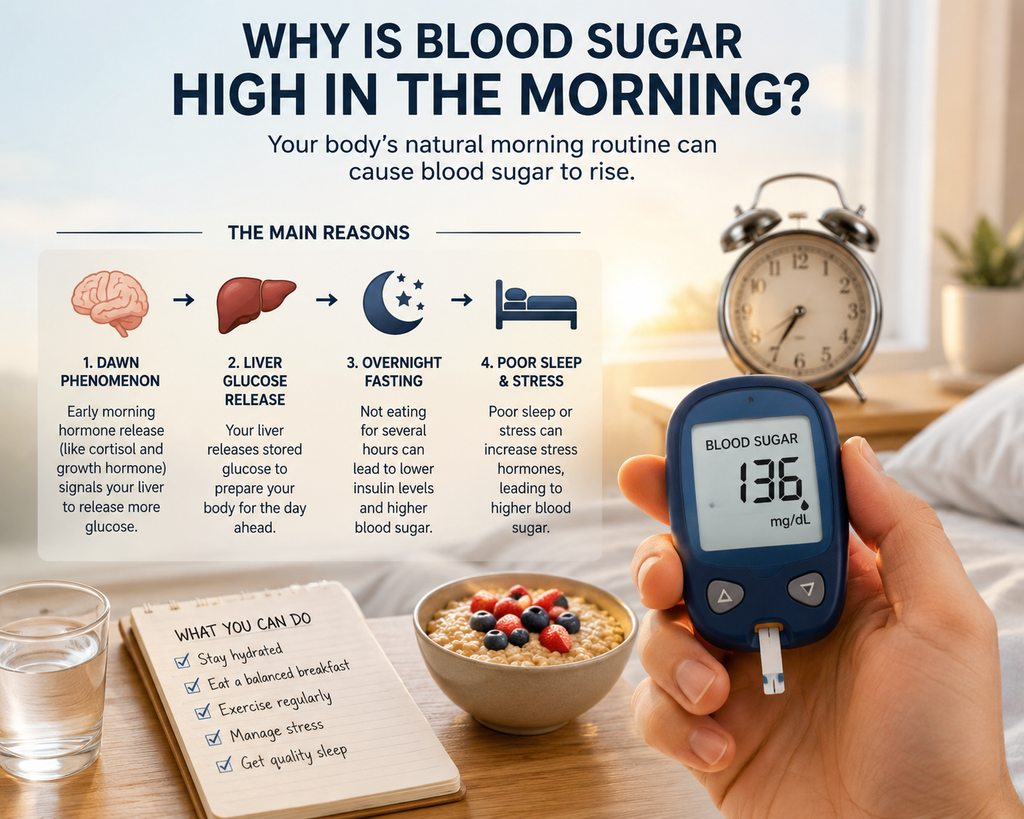
Your body does not completely switch off while you sleep. As morning approaches, it begins preparing you to wake up. Hormones such as cortisol, growth hormone, glucagon, and epinephrine become more active. These counter regulatory hormones can reduce insulin sensitivity and encourage the liver to release glucose into the bloodstream.
In someone without diabetes, the pancreas responds by releasing enough insulin to keep glucose within a relatively narrow range. In diabetes, insulin may be absent, insufficient, or less effective because of insulin resistance. Consequently, glucose released by the liver may remain in the bloodstream, producing high morning blood sugar.
Why Does Blood Sugar Rise Before You Eat?
Many readers understandably ask, “How can my glucose increase if I have eaten nothing?”
The answer is that food is not the only source of glucose in your bloodstream. Your liver stores glucose and can release it when your body needs energy. During the night and early morning, hormonal signals tell the liver that the body is preparing for activity.
The problem in diabetes is not necessarily that glucose is being released, but that there may not be enough effective insulin available to move glucose into cells and restrain further glucose production.
This is why fasting blood sugar can rise even after hours without food.
Hormones Behind the Dawn Phenomenon
Several hormones participate in normal morning physiology.
Cortisol follows a daily rhythm and typically increases toward morning. It helps prepare the body for waking and can increase glucose availability. Growth hormone, released in pulses during sleep, can temporarily reduce insulin sensitivity. Glucagon signals the liver to produce and release glucose, while epinephrine can also increase glucose availability when the body needs rapid energy.
Together, these hormones oppose some actions of insulin. For most people without diabetes, pancreatic insulin secretion compensates. For someone with diabetes, however, that balance may be disrupted.
Dawn Phenomenon in Type 1 and Type 2 Diabetes
The basic morning pattern can occur in both major forms of diabetes, although the underlying insulin problem differs.
In type 1 diabetes, the pancreas produces little or no insulin, so carefully planned insulin replacement is necessary. If basal insulin coverage does not adequately match early morning needs, glucose may climb before breakfast.
In type 2 diabetes, insulin resistance and progressive impairment of insulin secretion can make it difficult for the body to suppress liver glucose production. A person may therefore wake with elevated fasting glucose despite eating a reasonable dinner.
Is Every High Morning Reading the Dawn Phenomenon?
No.
Morning hyperglycemia can also occur when diabetes medication or insulin does not provide sufficient overnight coverage. A carbohydrate heavy bedtime snack may contribute. Stress, illness, poor sleep, dehydration, steroid medicines, or changes in activity can also affect glucose.
Another historically discussed explanation is the Somogyi effect, sometimes called rebound hyperglycemia. The theory proposes that blood glucose drops too low during the night and counter regulatory hormones subsequently drive glucose upward. Modern continuous glucose monitoring research has challenged how commonly this actually occurs, so it should not automatically be assumed.
Do not increase or decrease insulin based solely on a high morning reading without understanding what happened overnight.
How Can You Identify the Dawn Phenomenon?
Look for a repeated pattern.
Record your glucose at bedtime and again when you wake. Depending on your treatment plan, your healthcare professional may recommend checking during the early morning hours for several nights. A continuous glucose monitor, or CGM, can be especially useful because it shows glucose trends throughout sleep rather than providing only isolated measurements.
If glucose is relatively stable overnight and then begins climbing toward morning without preceding hypoglycemia, the pattern may support dawn phenomenon. If glucose is already high at bedtime, dinner, evening medication, or other factors may deserve attention. If glucose falls too low overnight, management requires a different approach.
For people using insulin, nighttime measurements should be planned with their diabetes team when necessary, particularly if nocturnal hypoglycemia is possible.
Can Evening Food Affect Morning Blood Sugar?
A large late dinner or carbohydrate rich bedtime snack may keep glucose elevated into the night. The morning hormonal rise can then add to an already elevated level. Watching portion sizes, carbohydrate quality, meal timing, and personal glucose responses may reveal useful patterns.
However, avoiding all carbohydrates at night is not appropriate for everyone. Some people may need an evening snack because of their medication regimen, activity level, or risk of hypoglycemia. Diabetes nutrition should be individualized rather than built around rigid rules.
Try recording dinner, snacks, activity, bedtime glucose, and morning glucose for several days.
How to Manage High Blood Sugar in the Morning
Consistent meal timing may help some people. Avoiding unnecessary carbohydrate heavy snacks before bed can reduce overnight glucose exposure. Regular physical activity can improve insulin sensitivity, and some people find that appropriate activity after dinner supports better overnight glucose patterns. Adequate sleep and stress management also belong in comprehensive diabetes care.
Medication timing or dosage sometimes needs adjustment. People using insulin pumps may require different basal delivery during early morning hours. Others may need changes in long acting insulin or other glucose lowering medication. These decisions should be made with a qualified healthcare professional because increasing overnight insulin without adequate information can cause dangerous hypoglycemia.
When Should High Morning Blood Sugar Concern You?
One unexpected morning reading is not the same as a persistent pattern. Repeated fasting hyperglycemia, however, deserves attention because ongoing elevated glucose can contribute to higher overall glycemic exposure.
Contact your healthcare professional if morning glucose remains above your individualized target despite following your treatment plan, if readings change suddenly without an obvious explanation, or if you experience frequent high or low glucose episodes.
Seek urgent medical advice when severe hyperglycemia is accompanied by concerning symptoms such as vomiting, difficulty breathing, confusion, marked dehydration, or signs of diabetic ketoacidosis, especially in type 1 diabetes. Follow your prescribed sick day and ketone testing plan when applicable.
A Better Way to Think About Morning Glucose
A high fasting blood sugar reading can feel like a disappointing start to the day, but it should be treated as information, not a personal failure. Diabetes management is largely about recognizing patterns and understanding what the body is communicating.
If your glucose repeatedly rises before breakfast, compare bedtime and morning readings and review overnight trends when available. Consider dinner timing, bedtime snacks, medication timing, physical activity, sleep, illness, and stress. Then discuss those observations with your healthcare team.
The dawn phenomenon reminds us that diabetes is not controlled only by what we eat. Hormones, circadian rhythms, liver glucose production, insulin secretion, and insulin sensitivity continue interacting while we sleep.
Understanding that physiology can turn an unexplained morning number into a useful clue. With appropriate glucose monitoring and individualized treatment, many people can reduce morning hyperglycemia without creating unnecessary overnight lows.
Tracking these details for weeks can make conversations with your healthcare professional more productive. Bring your glucose log or CGM report to appointments and note unusual meals, exercise, stress, illness, or missed medication. The goal is not a perfect number every morning, but a safer pattern that supports better long term glucose management.
Final Thoughts
So, why is blood sugar high in the morning? For many people with diabetes, the dawn phenomenon is part of the answer. As morning approaches, natural hormonal changes tell the liver to provide energy for waking. When insulin is unavailable or cannot work effectively enough, blood glucose rises.
The most important step is identifying your individual pattern rather than guessing. Monitor consistently, look at overnight trends, and work with your diabetes care team before changing insulin or medication. Morning glucose is one piece of a much larger picture, and understanding the reason behind it can help you make safer, more confident diabetes management decisions.
References
American Diabetes Association Professional Practice Committee. Standards of Care in Diabetes, 2026. Diabetes Care. 2026.
Mayo Clinic. The Dawn Phenomenon: What Can You Do? Updated February 2026.
Cleveland Clinic. Dawn Phenomenon: What It Is, Causes, Symptoms and Treatment.
Porcellati F, Lucidi P, Bolli GB, Fanelli CG. Thirty Years of Research on the Dawn Phenomenon: Lessons to Optimize Blood Glucose Control in Diabetes. Diabetes Care. 2013.