


What Is a Normal Post Meal Glucose Level?
By Dr William Johnson
Have you ever checked your blood sugar after eating and wondered whether the number on the screen is normal? You are not alone. Blood sugar naturally rises after food, but the size and duration of that rise matter.
Understanding blood sugar after eating helps reveal how meals, activity, medication, and daily habits affect diabetes management. The goal is to recognize patterns and know when repeated highs deserve attention.
What Is Post Meal Blood Sugar?
Post meal blood sugar, also called postprandial glucose, is the glucose level in your bloodstream after you eat. Carbohydrates are broken down into glucose, which enters the blood and provides energy. In response, the pancreas releases insulin to help glucose move from the bloodstream into cells.
In diabetes, this process may be less effective because the body lacks enough insulin, does not use it effectively, or both. Blood glucose may therefore rise higher or remain elevated longer.
What Is a Normal Blood Sugar Level After Eating?
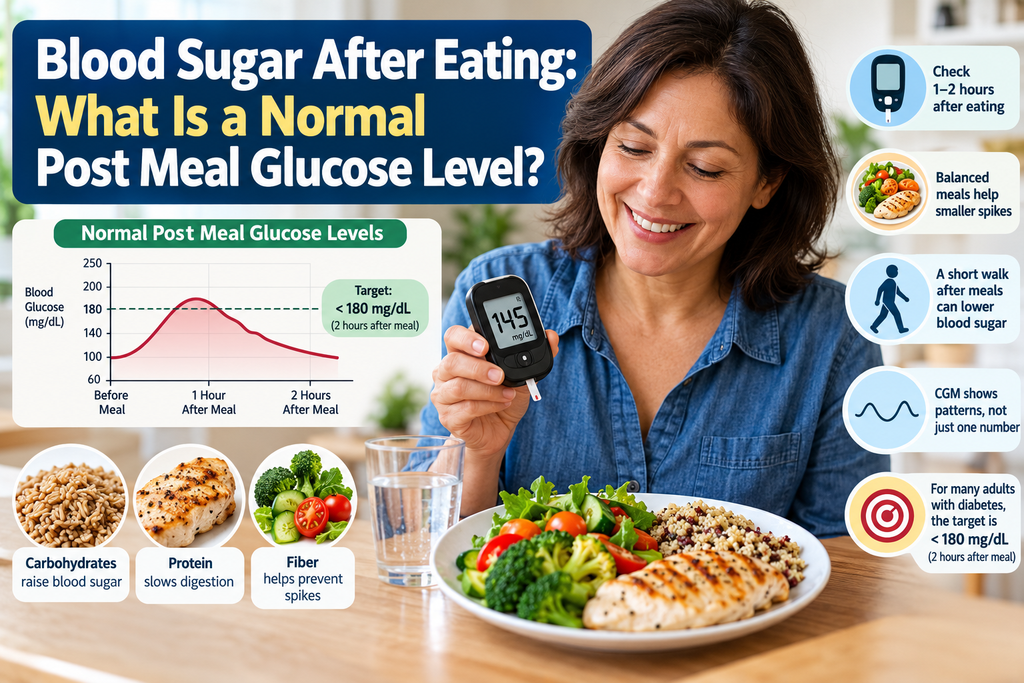
There is no single perfect post meal glucose number for everyone. For many nonpregnant adults with diabetes, the American Diabetes Association recommends a peak postprandial glucose target below 180 mg/dL, or 10.0 mmol/L. Targets may be adjusted according to age, medications, diabetes duration, other medical conditions, and risk of hypoglycemia.
For people without diagnosed diabetes, one home glucose reading is not enough to diagnose diabetes or prediabetes. Diagnosis requires appropriate testing and clinical interpretation.
When Should You Check Blood Sugar After Eating?
Timing changes the meaning of the result. For postprandial monitoring, glucose is generally checked one to two hours after the beginning of a meal, not one to two hours after finishing it.
Glucose often rises during this period, so consistent timing makes readings easier to compare. Record when you ate, what you ate, the result, medication, and activity.
Checking before the meal adds context. A pre meal reading shows where you started, while the post meal result shows your response. Together, they tell a more useful story.
Why Does Blood Sugar Spike After Meals?
Food is supposed to raise glucose. The question is how much, how quickly, and for how long. Carbohydrates usually have the most immediate effect because they are broken down into glucose. Refined carbohydrates and sugary drinks can be absorbed rapidly, producing a sharper rise in some people.
Portion size matters too. A large serving of rice, bread, pasta, potatoes, sweets, or sweetened beverages can deliver a substantial carbohydrate load even when the food itself is familiar.
Protein, Fat, and Fiber Change the Glucose Curve
A meal is more than its carbohydrate count. Fiber can slow digestion and may help produce a steadier glucose response. Protein and fat can also change how quickly a mixed meal is digested, although high fat meals may sometimes cause a delayed and prolonged rise.
This is why two meals containing similar amounts of carbohydrate can create different CGM curves. The combination, portion, preparation method, and your individual metabolism all matter.
A practical approach is to build meals around vegetables, appropriate portions of high fiber carbohydrate, and a source of protein rather than eating large portions of refined carbohydrate alone. Patterns and portions are more useful.
Can Walking After a Meal Help Blood Sugar?
Physical activity helps muscles use glucose and can lower blood sugar. A gentle walk after eating can add useful movement to the day.
However, exercise advice is not identical for everyone. People using insulin or medicines that can cause hypoglycemia may need to check glucose around activity and discuss medication, food, and exercise timing with their healthcare team. If glucose is very high or you feel unwell, follow your personal diabetes plan rather than assuming exercise is always the answer.
What Can a CGM Tell You About Post Meal Glucose?
A continuous glucose monitor, or CGM, shows more than one number. It can reveal how quickly glucose rises, when it peaks, how long it remains elevated, and whether it later falls too low.
For many adults with diabetes, a commonly used CGM target range is 70 to 180 mg/dL. The ADA recommends a time in range goal above 70 percent for many adults, although individual targets differ.
Instead of becoming worried about every arrow or temporary spike, look for repeated patterns. Does breakfast consistently create your largest rise? Does a particular portion of rice push glucose higher? Does a short walk change the curve? Patterns can turn CGM data into practical information.
What If Your Blood Sugar Is Repeatedly High After Eating?
One high reading can follow a larger meal, illness, stress, missed medication, reduced activity, or an unusual schedule. Repeated post meal highs matter more than an isolated result.
If your post meal blood sugar frequently exceeds the target agreed with your healthcare professional, record the readings and discuss them with your diabetes care team. Medication timing, meal composition, carbohydrate portions, insulin dosing, or other factors may need review. Do not repeatedly change prescription medication or insulin doses on your own unless you have already been given a specific adjustment plan.
Persistent thirst, frequent urination, unexplained weight loss, marked fatigue, vomiting, confusion, or very high glucose readings deserve medical attention, particularly when accompanied by ketones or illness.
Do Not Forget Low Blood Sugar
Post meal monitoring is not only about preventing highs. Blood glucose below 70 mg/dL is considered hypoglycemia for most people with diabetes. This can occur when insulin or certain glucose lowering medicines, food intake, and physical activity are not well matched.
Symptoms may include sweating, shaking, hunger, dizziness, irritability, or confusion. People at risk should know their individualized treatment plan and carry an appropriate fast acting glucose source.
Simple Ways to Improve Post Meal Glucose Patterns
Start with observation rather than perfection. Eat balanced meals when possible. Pay attention to carbohydrate portions and choose higher fiber foods more often. Pair carbohydrate foods with protein and nonstarchy vegetables. Choose water instead of sugar sweetened drinks more frequently. Add safe physical activity to your routine.
Compare similar situations. If you want to understand how breakfast affects you, test at consistent times on several comparable days. Changing five things at once makes it difficult to know what helped.
Your glucose meter or CGM is not a report card. It is information. Use the numbers to ask better questions about meals, medication, movement, stress, and sleep.
Internal Reading: Understanding Morning Blood Sugar
Post meal glucose is only one part of the daily picture. Some people notice that glucose is unexpectedly high before breakfast even when they did not eat overnight. This may relate to the dawn phenomenon and normal early morning hormonal changes.
Read our guide, “Why Is Blood Sugar High in the Morning? Understanding the Dawn Phenomenon in Diabetes,” to learn why fasting and morning glucose can behave differently from post meal glucose.
Diabetes Union: Free Diabetes Information for Patients
Diabetes Union is a free educational website created to make diabetes information easier to understand for patients, families, and anyone wanting to learn more about blood sugar management. Our aim is to turn complicated health topics into practical, readable guidance that can support informed conversations with healthcare professionals. Educational information should complement, not replace, individualized medical care.
Diabetes Care Goes Beyond Glucose Numbers
Managing diabetes also means thinking about daily comfort, skin care, circulation, and foot awareness. People living with diabetes are often encouraged to check their feet regularly and choose footwear and socks that do not create unnecessary pressure or friction.
For readers exploring diabetic friendly socks, StealthSox offers options designed with comfort focused features. Socks do not treat high blood sugar or prevent diabetes complications by themselves, but thoughtful everyday foot care can be one useful part of a broader diabetes routine.
The Takeaway
Blood sugar after eating gives you a valuable window into how your body responds to food. For many nonpregnant adults with diabetes, a commonly recommended peak post meal glucose target is below 180 mg/dL, checked one to two hours after the meal begins. Your personal target may be different.
Focus on trends rather than a single number. Consider what you ate, portion size, medication, activity, stress, and timing. If readings are repeatedly outside your target range, share the pattern with your healthcare team.
The most useful glucose reading is not simply one that looks “good.” It is one that helps you understand your body and make safer, more informed decisions.
References
American Diabetes Association Professional Practice Committee. “Glycemic Goals, Hypoglycemia, and Hyperglycemic Crises: Standards of Care in Diabetes—2026.” Diabetes Care, 2026.
National Institute of Diabetes and Digestive and Kidney Diseases. “Managing Diabetes.” National Institutes of Health.
National Institute of Diabetes and Digestive and Kidney Diseases. “Healthy Living with Diabetes.” National Institutes of Health.
Centers for Disease Control and Prevention. “Manage Blood Sugar.” Diabetes.
Centers for Disease Control and Prevention. “Monitoring Your Blood Sugar.” Diabetes.
American Diabetes Association. “CGM and Time in Range.”