


By Dr William Johnson
Living with diabetes can sometimes feel like a numbers game. You check blood glucose, think about meals, take medication, and attend appointments. But those numbers matter because blood sugar that remains above your personal target over months or years can gradually affect tissues throughout the body. The important message is not to fear every high reading. One occasional rise is different from chronic hyperglycemia. Understanding the long term effects of diabetes can help you recognize risks, ask better questions, and take practical steps to protect your health.
What Does Chronic Hyperglycemia Mean?
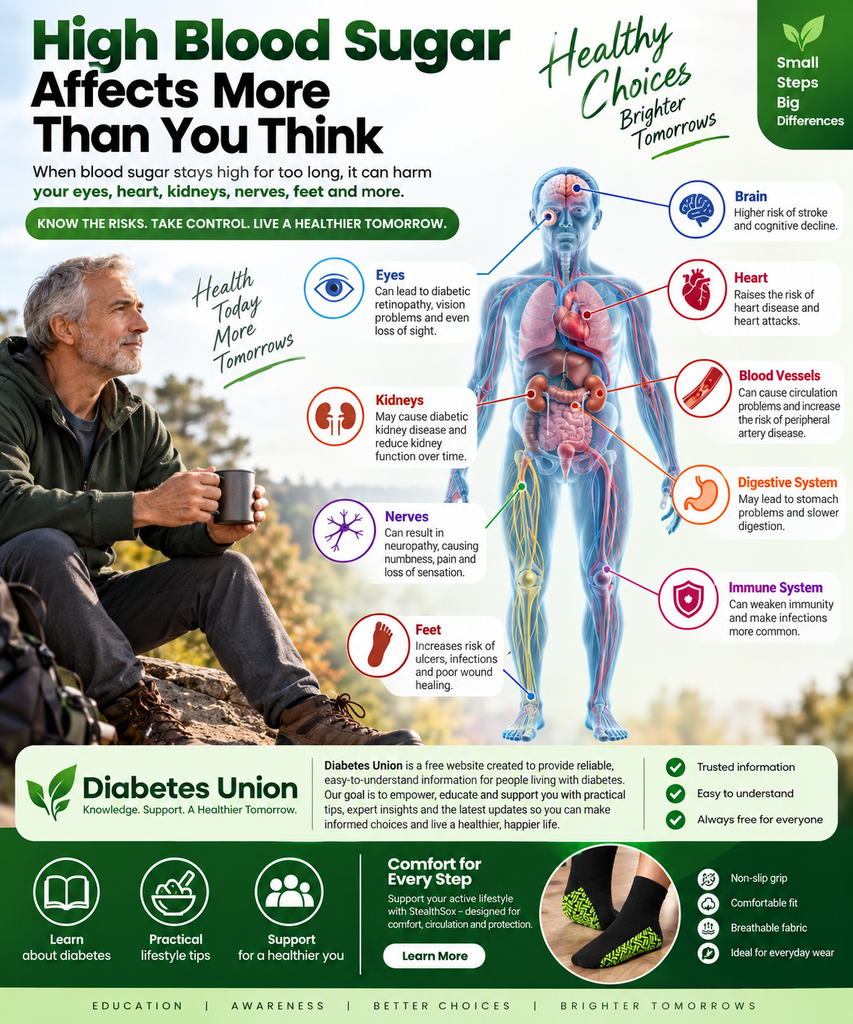
Hyperglycemia means there is too much glucose in the bloodstream. In diabetes, this happens because the body does not make enough insulin, cannot use insulin effectively, or both. When blood sugar stays high for too long, excess glucose contributes to changes in blood vessels and nerves. Over time, these changes can affect organs that depend on healthy circulation, including the eyes, kidneys, heart, brain, and feet.
Complications do not develop in exactly the same way for everyone. Risk is influenced by glucose management, blood pressure, cholesterol, smoking, duration of diabetes, genetics, and other health factors. This is why diabetes care should always be individualized with your healthcare team.
How High Blood Sugar Affects the Eyes
The eyes contain delicate small blood vessels, particularly in the retina. Persistently high blood glucose can damage these vessels, causing them to leak, swell, close, or develop abnormal new vessels. This process can lead to diabetic retinopathy and diabetic macular edema. Diabetes is also associated with cataracts and glaucoma.
One challenge is that early diabetic eye disease may cause no obvious symptoms. Vision can seem completely normal while changes are developing. Regular dilated eye examinations are therefore important even when you see well.
How Diabetes Can Affect the Kidneys
Your kidneys continuously filter waste and excess fluid from the blood. Their filtering system contains tiny blood vessels, making them vulnerable to long term diabetes related damage. High blood glucose can damage these vessels, and high blood pressure can add further stress.
Diabetic kidney disease often develops slowly and may not cause noticeable symptoms in its early stages. Kidney checks can therefore be important before you feel unwell. Healthcare professionals may use urine and blood tests to assess kidney health. Managing blood glucose and blood pressure, taking prescribed medicines, and attending recommended screening can help reduce the risk or slow progression.
Nerve Damage and Diabetic Neuropathy
Nerves carry messages between the brain and the rest of the body. Over time, high glucose and abnormal blood fats can damage nerves and the small vessels that supply them. This is known as diabetic neuropathy.
Peripheral neuropathy commonly affects the feet and legs. Symptoms may include tingling, burning, shooting pain, numbness, or reduced ability to feel temperature and injury. Some people have significant nerve damage without realizing it. Autonomic neuropathy can affect internal functions such as digestion, bladder function, heart rate, blood pressure, and sexual function.
Loss of sensation matters because a blister, cut, or pressure area may go unnoticed and worsen before the person feels pain.
Heart and Blood Vessel Complications
Diabetes does not only affect tiny blood vessels. Over time, high blood sugar can damage larger blood vessels and the nerves that control the heart. People with diabetes also commonly have other cardiovascular risk factors, including high blood pressure and unhealthy cholesterol levels.
Together, these factors increase the risk of cardiovascular disease, including heart attack and stroke. Protecting cardiovascular health means looking beyond glucose alone. Blood pressure, cholesterol, physical activity, smoking status, body weight, nutrition, and prescribed medicines can all be part of an individualized prevention plan.
Your clinician can help determine which targets and treatments are appropriate for you rather than relying on a single universal number.
Diabetes, Feet, and Wound Healing
Feet deserve special attention in diabetes because several complications can meet in one place. Nerve damage may reduce sensation, while impaired circulation can reduce the delivery of oxygen and nutrients needed by tissues. A small blister, crack, cut, or pressure point can therefore become more serious if it is not noticed and treated promptly.
Diabetic foot ulcers may become infected and can be difficult to heal. In severe cases, infection or tissue damage may ultimately lead to amputation. This sounds frightening, but the purpose of learning about foot complications is prevention, not fear.
Check your feet daily for redness, swelling, cuts, blisters, cracks, or unusual changes. Wear suitable footwear, avoid walking barefoot when injury is possible, and seek professional care for wounds that are infected or not healing.
Why Wounds May Heal More Slowly
Healing is a complex process involving circulation, immune responses, healthy tissue, and adequate nutrients. Significant hyperglycemia is associated with infection and poor wound healing. When circulation is reduced or sensation is impaired, the problem can become more complicated because injuries may be noticed late and tissues may receive less support for repair.
Never ignore a persistent wound because it appears small. A foot sore that becomes red, swollen, painful, draining, infected, or fails to heal deserves medical assessment. Early attention can prevent a minor problem from becoming a major one.
Other Long Term Effects of Diabetes
The effects of diabetes can extend beyond the organs people discuss most often. Nerve damage may contribute to digestive, bladder, and sexual problems. Diabetes can also be associated with gum disease and other oral health problems. The broader lesson is simple: chronic hyperglycemia is not limited to one organ system.
That does not mean every person with diabetes will develop every complication. Regular monitoring allows healthcare professionals to look for early changes and address additional risk factors before problems become more advanced.
Can Diabetes Complications Be Prevented or Delayed?
Many diabetes complications can be prevented or delayed through good long term management. The goal is not perfection every day. It is consistent care built around targets that are appropriate for your individual circumstances.
Work with your healthcare team to manage blood glucose, blood pressure, and cholesterol. Take medicines as prescribed, attend recommended eye, kidney, dental, and foot checks, stay physically active in a way that is safe for you, follow an appropriate eating plan, and avoid smoking. If your glucose readings frequently remain above target, discuss them rather than simply accepting them as normal.
Small decisions become powerful when repeated over time.
Diabetes Union: Free Information for People Living With Diabetes
Diabetes Union is created as a free educational website for people living with diabetes, their families, and anyone trying to understand the condition more clearly. Our goal is to make diabetes information reader friendly and useful in everyday life, covering topics such as blood sugar, nutrition, complications, foot health, lifestyle, and preventive care.
The website should complement, not replace, professional medical care. Readers can use Diabetes Union to build knowledge, understand important health terms, and prepare better questions for their healthcare appointments. When diabetes information feels understandable rather than overwhelming, people can become more informed participants in their own care.
Protecting Tomorrow Starts Today
Long term complications are not a reason to live in fear of diabetes. They are a reason to understand it. High blood sugar can gradually affect the eyes, kidneys, nerves, heart, blood vessels, feet, and healing, often before obvious symptoms appear. That makes routine monitoring and preventive care especially valuable.
If you have diabetes, focus on what you can influence today: know your glucose targets, keep appointments, take prescribed treatment, check your feet, protect your eyes, monitor kidney and cardiovascular health, and speak up when something changes. Diabetes management is not about achieving a perfect day. It is about building healthier patterns across thousands of ordinary days.
Knowledge gives you context. Screening gives you early warning. Consistent care gives you the best opportunity to protect your health for years to come.
References
- National Institute of Diabetes and Digestive and Kidney Diseases. Preventing Diabetes Problems. National Institutes of Health.
- National Institute of Diabetes and Digestive and Kidney Diseases. Diabetic Eye Disease. National Institutes of Health.
- National Institute of Diabetes and Digestive and Kidney Diseases. Diabetic Kidney Disease. National Institutes of Health.
- Centers for Disease Control and Prevention. Put the Brakes on Diabetes Complications.
- Centers for Disease Control and Prevention. Your Feet and Diabetes.